

News
‘Safety research must contribute to further professionalisation’
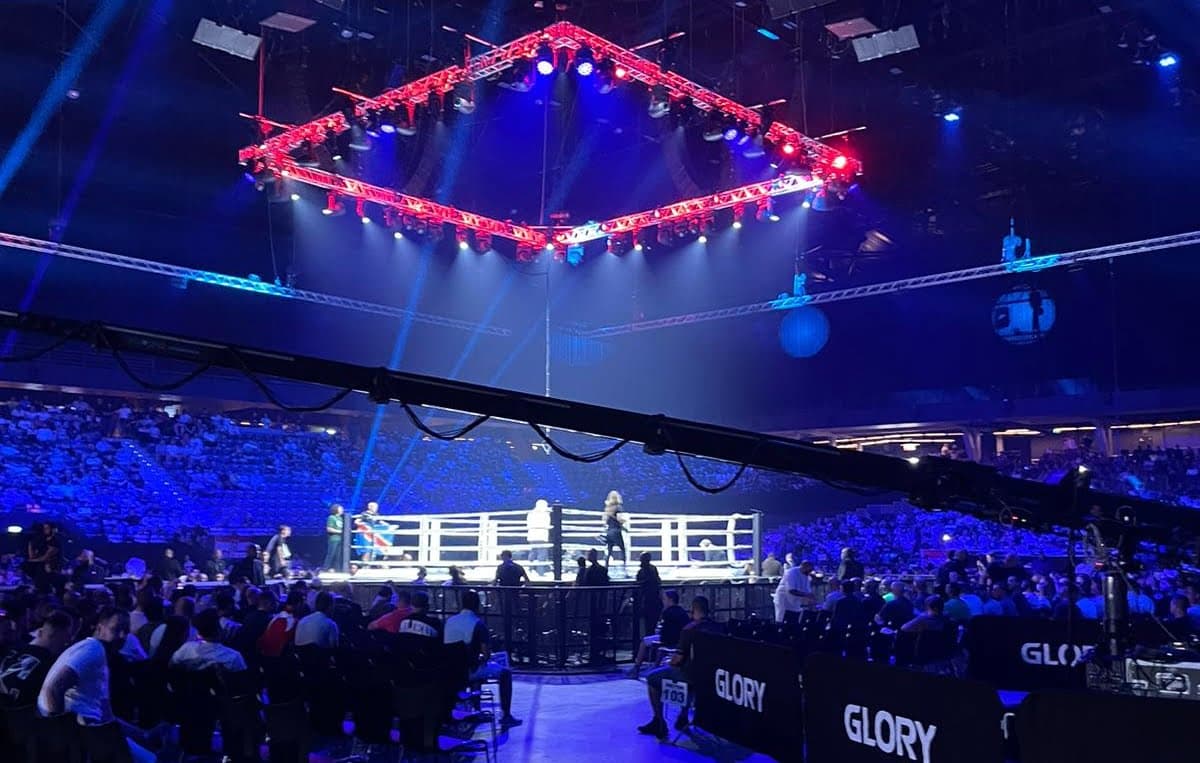
Integral Safety and Security Management (Integrale Veiligheidskunde) student Nathalie Schoemaker is conducting extensive research into safety at combat sports events. The aim is to identify where there is room for improvement. “I notice a great willingness to learn,” she says after her first introduction to the sector. “Most people understand that it is in the interest of combat sports to keep developing, including in this area.”
Ensuring safety at combat sports events is complex. It concerns matters such as the health of the fighters in the ring and medical provisions, but also the controlled arrival and departure of visitors. “It requires close cooperation between combat sports organisations, supervisory bodies and other stakeholders. Together, they have the responsibility to create a safe environment in which athletes can demonstrate their skills and spectators can enjoy them without concern.”
“It is important that the combat sports community continuously strives for improvement. In doing so, it can draw on the results of academic research and input from experts, but above all on practical experience.”
The question of safety at combat sports events covers various aspects. According to Schoemaker, the safety of the fighters and the audience comes first. “Competitive fighters must be protected against unnecessary risks while practising their sport. The chance of injuries and other health problems must be kept to a minimum. At the same time, spectators must be able to enjoy the event in a safe environment. Accidents, incidents and undesirable behaviour must be prevented through sensible policy.”
Confidence in the sport
Safety policy concerns the interests of the athlete and the spectator, but it also affects confidence in the sport. “Indirectly, it therefore also concerns the growth and development of combat sports and of the parties with an economic interest, such as sports entrepreneurs. The rules that protect participants and spectators are therefore also in the interest of the organisers. Even if it may not always feel that way when they have to comply with yet another rule.”
Schoemaker’s research can also help to increase awareness and education about safety at combat sports events. “By sharing the results of the research with the combat sports community in due course, it can contribute to a better understanding of the risks and the importance of safety measures, and thus contribute to positive change. I hope so because I naturally want my work to be of use, but also because as an active practitioner I care about combat sports.”
Consequences of a lack of safety
If social safety at combat sports events is neglected, this can have serious consequences. “Incidents can be very dangerous and unpleasant for those directly involved, but they can also damage the reputation of the combat sports sector. That can lead to a downward spiral: less interest, fewer new athletes, fewer gyms, fewer events, less media attention, loss of sponsors, and so on. A lack of safety can also lead to public pressure to impose stricter regulation, causing the combat sports sector to lose freedom.”
Over a period of 20 weeks, Schoemaker will carry out a thorough analysis of social safety at combat sports events in the Netherlands. She wants to identify the main problems and challenges and put forward proposals for improvement. “I have now been able to meet various highly experienced people within the sector and I will be collecting data through, among other things, conversations and interviews, a literature review and visits to events. The latter is of course the most enjoyable aspect of this research, because there is always some time to enjoy the bouts and the atmosphere myself.”
The research will result in an advisory report with concrete recommendations and possible measures to strengthen social safety. “The VA (Nederlandse Vechtsportautoriteit, the Dutch combat sports regulator) can use the recommendations to improve the existing Guide to combat sports events. Promotors and events can then put this into practice. In that very concrete way, I hope to do my bit towards the further professionalisation of combat sports in the Netherlands.”
Do you have questions about safety matters? Email Nathalie at veiligheidszaken@vechtsportautoriteit.nl