

News
'Inclusion should be self-evident'
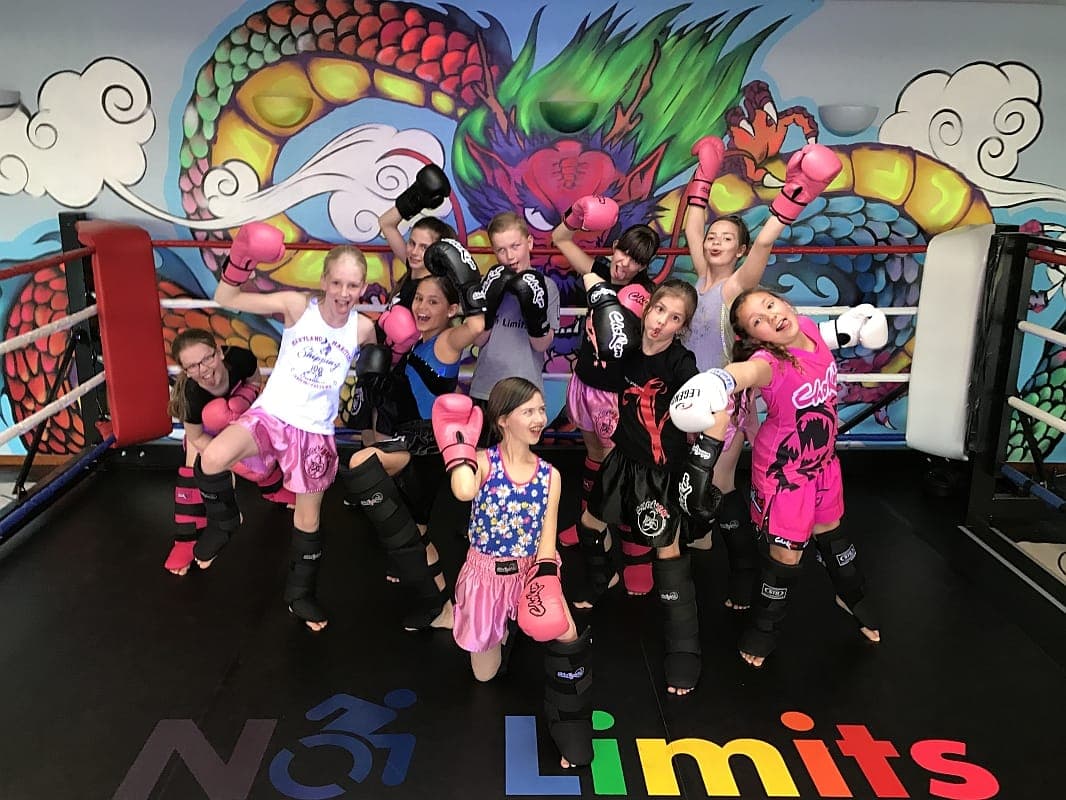
The sport-wide campaign Onze Club Is Voor Iedereen (Our Club Is For Everyone) draws attention to diversity and inclusion. Perhaps somewhat fashionable terms, but it simply comes down to everyone being welcome. Martial arts have traditionally been very colourful, including in terms of the backgrounds of the participants. Even so, there are still opportunities to help new groups over the threshold. Fighters with a physical or mental disability, for example. We highlight a number of gyms that may inspire others to appeal to a wider audience as well. This time: No Limits Gym in Nieuwerkerk aan den IJssel.
When Antoine Schutte started a gym, he wanted a name that made clear that truly everyone is welcome. 'People with and without a disability, lesbian, gay, transgender or bisexual, man, woman, child, regardless of race or skin colour,' the website states emphatically. 'It is important to know that this is a gym where respect, equality, a sense of belonging, safety and sportsmanship are the soul of the gym, and that people embody this when they train here.'
For a long time Antoine devoted himself to Wushu and made the Dutch national team in the 1990s. But he broadened his skills and also practised boxing, kickboxing and jiu-jitsu. Alongside his professional career, he works in IT in the healthcare sector, Antoine remained active in sport.
"I coached footballers and tennis players and thought about the idea of starting my own gym. But not 'just' a gym with anonymous customers, I wanted to know everyone. And I had already noticed that there was little on offer for people with a disability. Something I was perhaps more aware of thanks to a niece with a disability."
"I started out in a gymnasium under an anti-squat arrangement and moved to my current location in 2016. It is a hobby that got out of hand. I still have a job in IT, I do not want to be dependent on my sports activities. I do not want to be forced to say 'yes' to the temptation of giving personal training to wealthy people. I think it is very important that sport is accessible to people on a lower income. That is why I operate through a foundation, not for profit, and keep working on the side."

Antoine Schutte in his gym
"It took off straight away, I think partly because there was little on offer for people with a disability. But it mainly took some getting used to for people without a disability. They have to learn how to deal with someone who has a disability. There are very few people who pick that up at home. You do not have to speak slowly to someone in a wheelchair, for example. But that develops, and that is where I have a role as a coach."
"If inclusion means a separate little class for everyone, then I am out. I do not want to sort people by colour, or background, or sexual orientation, but to be so open that everyone is welcome as a matter of course and trains together. People with and without a disability mixed together as much as possible."
"The satisfaction I get from it myself is considerable. One of my students had a spinal cord injury, they thought he could no longer use his legs at all. But while he was training I saw a foot move. It was examined again and it turned out to be a partial rather than a complete spinal cord injury. Starting from kickboxing training, we began to develop his ability to move bit by bit. We are seeing progress and he is gaining more and more control over his own body. That gives enormous satisfaction, and of course it keeps motivating me too."
"To other gym owners who want to open their doors a little wider to people with a disability, or with a difficult history, I would give one tip: stick to what you are good at. For instance, I have also supported young people who were suicidal. Through sport I can help them feel better, but I should not take on the role of a psychologist. Sport remains the core."
Through NOC*NSF (the Dutch Olympic Committee and Dutch Sports Federation), the campaign Onze club is voor iedereen offers support to clubs, associations and sports entrepreneurs that want to actively work on diversity and inclusion. A menu of options has been developed for this purpose, including free workshops and training programmes.