

News
‘One federation is above all in the athlete's interest’
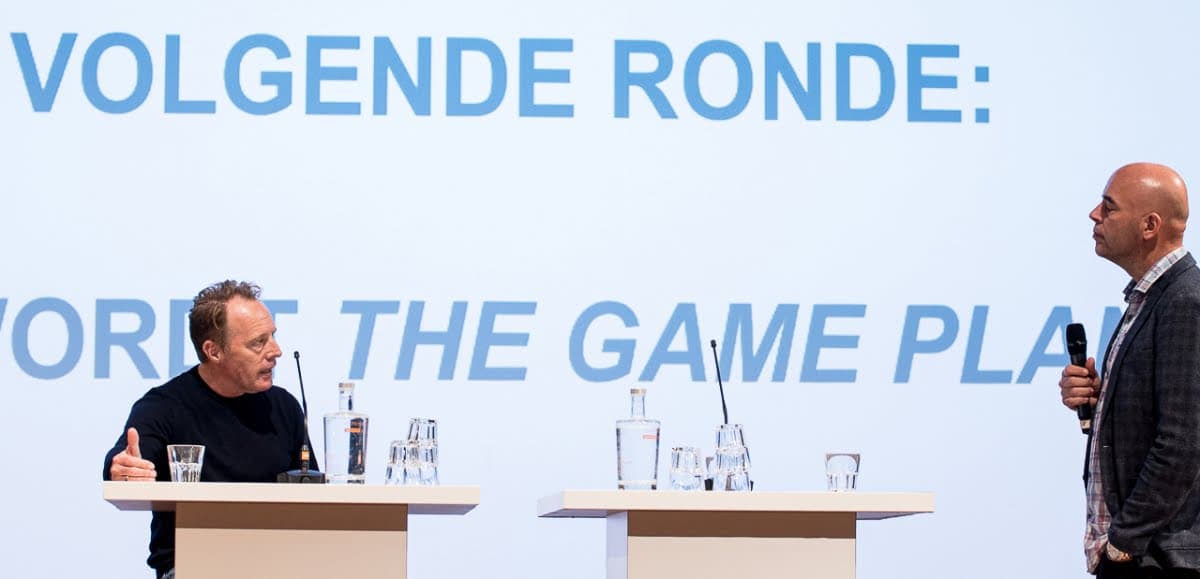
Five years ago this month, the Dutch Combat Sports Authority began its work. On this first anniversary, VA chairman Herbert Dekkers looks back and ahead in two conversations. The first part of the diptych focused on safety. This second conversation centres on the future of combat sports. “It is in the interest of athletes and gym owners that we move towards one federation. We weigh all other interests, but they are subordinate to that.”
The initial assignments given to the VA when the young organisation started in 2017 have largely been carried out. The Fightpassport has been launched and is now indispensable. All federations abide by agreements set out annually in a covenant. Licences have been introduced for promoters and matchmakers, so their quality can be monitored and improved. There is a ban on kicks and strikes to the head in youth competitions, there is a contract with the anti-doping authority. Is the VA finished, and is it now a matter of maintenance? “What has been built up over the past five years came mainly from a response to abuses,” says Dekkers. “There was too little attention for health, there was criminal interference, the organisation of the sport fell short; the measures so far have been aimed at that. Now the challenge is: how do we ensure these sports can stand on their own feet?”
Advantages
The VA is a regulator, but it also carries out all kinds of federation tasks that were not previously taken up. Such as central registration in the Fightpassport, issuing licences, the quality mark for gyms, tackling transgressive behaviour, and organising doping controls. As long as the VA does those things, you cannot speak of a sport that stands on its own feet. “Those tasks do indeed belong with a federation, and we would gladly hand them over so that we can focus on our core task: supervision. But beyond that, in a serious sport much more should be done by a federation, in the interest of the athlete and the gym owner. Every serious sport in the Netherlands is organised by a single federation affiliated with the sports confederation NOC*NSF. Such a federation offers a great many advantages. It organises one national championship, so that such a title really means something. Then the newspaper and the sports programmes also know who deserves attention. They provide the strongest possible delegation to European and world championships, with the best national coaches. Such a federation can also attract major sponsors and receives money from the lotteries. That can then be spent on supporting elite athletes and talents, as we see with judoka and speed skaters, for example. Something that does not happen at all in combat sports at the moment, leaving talents entirely to their own devices. Serious sports federations also stand up for the economic interests of clubs and gyms and make themselves heard towards politics and the media. During the coronavirus crisis we saw how important that was. At the VA we are convinced that athletes and gyms benefit from one federation. And all other interests in the sector should be subordinate to the interests of the athlete and the gym owner. Because who are we all doing it for? Ultimately for them, surely?”
Doubts
Calls for one federation have been made for a long time. A survey among gym owners also indicated broad support. Yet there are sceptics as well. What objections are raised? “We do meet some resistance, but honestly we do not so much hear concrete objections. Nobody is against better organisation. The scepticism usually stems from uncertainty, and that is understandable. Board members of existing federations in particular naturally wonder where they themselves fit into that new picture. They have sometimes worked for 20 years to build an organisation; it is only logical that they want to handle that carefully. But there is room for those organisations within the one-federation story. If they have good, well-drilled teams of officials, those can simply continue working from within the new federation. If they have good trainers of trainers, that is worth its weight in gold. We naturally want to take along all the knowledge and experience these people have built up. But let us unite all that knowledge and experience, now scattered across nine small organisations, in one strong organisation with the athlete and gym owner at its centre.”
What about promoters? Can the big, well-known promoters and all those smaller organisers of galas continue to organise their events under their own name? “Promoters, too, have nothing to fear from the move towards one federation. Anyone who wants to keep organising events can continue to do so. And we do not want uniformity; they can simply keep working under their own name or brand, with their own style and culture and their own championships. It will also become easier for them to arrange sponsors and media attention and to obtain permits if they work under the flag of one recognisable sports federation that everyone acknowledges.”
But how?
Will the VA become that federation? Will the existing federations merge? How does the VA envisage it? “The VA will continue to exist as an independent regulator alongside such a new federation. So we are not going to set up a federation and then take the attractive board positions ourselves. No, for building such a federation we want an independent pathfinder to be appointed. That person may then determine how this proverbial house for combat sports is furnished, and how we set up separate rooms for kickboxing, Thai boxing and MMA. And they can then also find the most suitable people to organise the training courses, coordinate the officials, organise the national championships, bring in sponsors and set up talent programmes.”
When?
The VA has now existed for five years. Will it take another five years to achieve this? “We set out in this direction last year and confirmed it at our congress. The sports confederation NOC*NSF has thrown the door wide open for affiliation, so that kickboxing, Thai boxing and MMA can become fully fledged and fully recognised sports within the Dutch sporting family. The ministry also supports this development, and the idea enjoys broad support among athletes and gym owners. If we all put our shoulders to the wheel and keep moving forward with everyone who wants to help build this, the federation should be in place by the end of next year.”
Part 1 of the diptych: ‘Safety is a precondition for the future of combat sports’
Photo: Herbert Dekkers (left) at the VA congress in conversation with presenter Leon Verdonschot