

News
‘The matchmaker licence was needed, the bar was set too low’
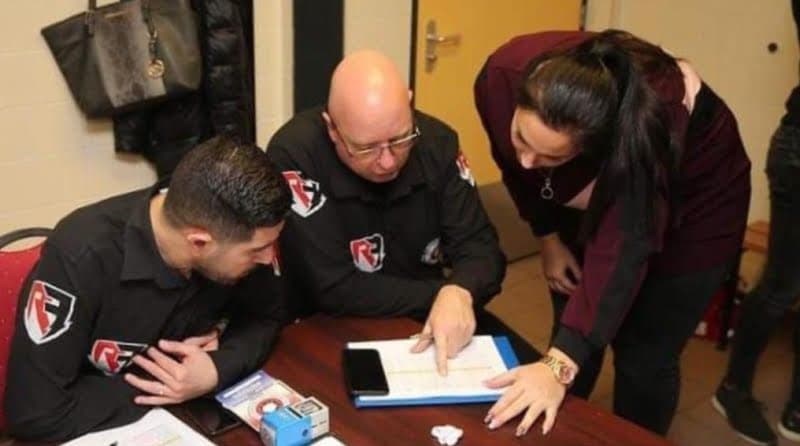
Ellen Bruins is one of the most experienced matchmakers in Dutch combat sports. She makes sure bouts are fought between more or less evenly matched opponents. To bring and keep the quality of matchmaking up to standard, the matchmaker licence was introduced. Rightly so, she believes. ‘The bar was set too low. You do not want people looking for something to keep them busy to ‘just start matchmaking’ because they have watched a few classes from a gym canteen.’
That competitive fighters get an evenly matched opponent seems obvious. Of course you do not put a thirty-year-old man of 100 kilos against a twelve-year-old girl of 50 kilos. Yet matchmaking is not as simple as it may seem. What does a matchmaker look at?
“I look at age, and by that I do not just mean the year. For youth, officially there may be two years between them, but someone who has just turned 13 can differ by 35 months from someone who turned 15 long ago. I prefer it closer together; a maximum of a year and a half is ideal. I look at the class they compete in, of course. But it is not as simple as: you have a C-class kickboxer of 70 kilos and you look for another C-class fighter of 70 kilos and you are done. I also look at the record within the current class. Any youth experience, which is not unimportant either. And whether they have previously fought bouts in other relevant combat sports. I also look at weight, and, importantly, at the gym. At one gym you may fight a bout fairly soon, while another is demanding of its own pupils. I take that into account as well.”
What can go wrong?
“Lots of knockouts. That may be fun for the audience, but it is sometimes also a sign of mismatching. That is rather risky, because it concerns the health of the athletes. It can happen when matchmakers do not ask enough questions. I have had someone register a fighter for an MMA bout, John Nobody with zero MMA bouts, but then I ask further. Does he also have zero bouts in other sports, or is this the A-class kickboxer John Nobody? Yes, he turned out to have quite a bit of ring experience. So you do not put him against someone who has never fought a bout before. That is why I keep asking. And I do everything by email, so there can never be any confusion afterwards about what was and was not communicated.”
Some athletes prefer easy opponents so as to have many wins to their name. Keeping an unbeaten record seems to be a sport in itself these days. That can be influenced if you only accept matches with a high chance of winning. It is also a small world and many people wear more than one hat: they are both promoter and federation official. Or both promoter and trainer of some of the participants. Do people ever try to influence you?
“Yes, of course. Especially with withdrawals. Someone then has to get a new opponent, and sometimes they only want to say yes if there is a greater chance of winning. A stand-in who is not optimally prepared but has two more bouts is sometimes even rejected in the A class by the fighter or trainer. As if we have many other options at the last minute. The fact that people hope to influence you makes it important that you are and remain independent. I myself am independent of gyms, federations and promotions. You quickly end up with multiple interests. But I have to say: there are people who handle it perfectly well. Who both run a federation and act as a promoter and, in my view, really do so with integrity. But there are also those who wear several hats and then perhaps let one interest weigh more heavily, while that actually conflicts with another role they hold.”
Until recently there were essentially no requirements for matchmakers. The Combat Sports Authority wanted certain requirements to be set. Were you in favour straight away?
“Yes. The bar was set too low. Sometimes people with nothing to do suddenly turned up as experts, while they had not even attended a gala. Let alone in the capacity of matchmaker. That cannot be. I think it is an advantage if you have trained yourself, or perhaps even fought a bout. Then you know how dreadful it can be when an opponent withdraws at the last moment, because you can put yourself in their position better. Then you know how carefully you have to work.”
What does the process look like now? Can anyone become a matchmaker and get a licence?
“Anyone can apply, but there is limited capacity for training. That is another reason why we first look carefully at how motivated someone is, what basic knowledge they have, how well they know the world and the fighters. If they have no foundation and only want to do it for the money, the chances of success are not great.”
And what is your role?
“I guide trainee matchmakers when the VA pairs them with me. I show them how I have organised my process. I take them to events, when I have them, or they shadow the various federations to experience the practice. They write reports, I speak with those involved, question them and give feedback. But they must work independently as soon as possible. Build their own network, solve problems themselves, including the first few times. And when after a while I think: this person can stand on their own two feet, we give them that space. But it is still developing, mind you. I consult a lot with the VA because we keep learning lessons ourselves. We have to keep raising the bar for ourselves as well. Ultimately that benefits the professionalisation of our fine sport.”
People interested in obtaining a matchmaker licence can contact the VA office: info@vechtsportautoriteit.nl
Photo: Ellen Bruins in consultation with officials of the WMTA