

News
Fifty years of kickboxing in the Netherlands: the legacy of the pioneers
Half a century ago, the Netherlands became acquainted with a new sport: kickboxing. The pioneers turned our country into a leading nation in international combat sports and made history in the process. But their most important legacy may well be an entirely different one: they got hundreds of thousands of people of all ages and all walks of life moving.
This year marked fifty years since combat sports history was written. In 1975, three Dutch karateka, Jan Plas, Peter van den Hemel and Jan van Looijen, travelled to Japan for a training camp. There they encountered a sport that was unknown to them: kickboxing. It was a Japanese variant of Thai boxing, and it appealed to them immediately.
They attended kickboxing bouts, spoke with competitors and trainers and were invited to train along. In the space of a few weeks they went through a crash course and returned home with the ambition of bringing this hard combat sport to the Netherlands. Back in their own gyms, they began training in the new style. In Amsterdam, Jan Plas's Mejiro Gym and Thom Harinck's Chakuriki grew into elite training centres that pushed each other to ever higher levels through their rivalry.

Toshio Fujiwara and Jan Plas training together in Japan
Events
On 31 May 1976, the first Dutch kickboxing gala was held at the Jaap Edenhal in Amsterdam. That means next spring will also mark fifty years since a wider audience first became acquainted with kickboxing. The sport took off in the Netherlands from that point on. The number of tournaments and galas increased. Competition abroad also became more frequent. During the 1980s, international contests were organised regularly. Alongside the Netherlands, Japan, France and the United States were particularly strongly represented. Fighters such as Rob Kaman and Luci\u00ebn Carbin laid a foundation on which later generations could build.

Breakthrough
Internationally, kickboxing made its real breakthrough in the early 1990s. The Japanese organisation K-1 brought together the best heavyweights in the world in a prestigious tournament with substantial prize money. It was also the period in which commercial television was becoming increasingly prominent. With Eurosport, the first international European sports channel had been established. Until then, combat sports could only be watched on imported video tapes. Now audiences of millions were reached internationally more and more often. The K-1 stage was soon dominated by the Netherlands. At the 18 Grand Prix tournaments, the Dutch flag was raised no fewer than 15 times. Sem Schilt and Ernesto Hoost each won four times, Peter Aerts and Remy Bonjasky each won three times, and at the final edition Alistair Overeem walked away with the enormous trophy.

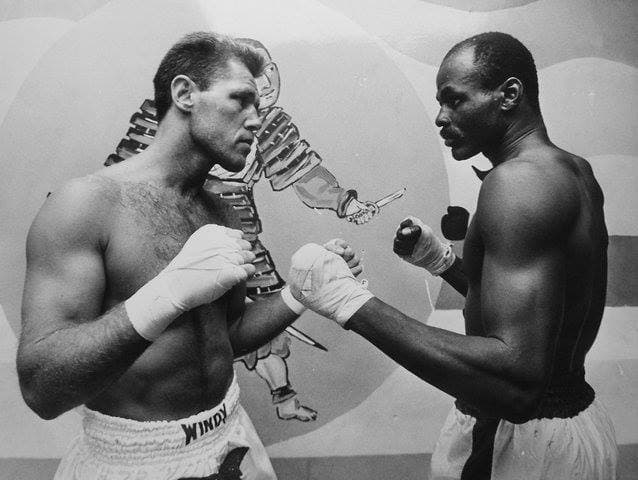
Rob Kaman and Ernesto Hoost during the face-off
Acceptance
After the K-1 era, other organisations took over. The promotion It's Showtime brought the sport in the Netherlands into a new phase with events at venues including the Amsterdam Arena. Later, Glory took over. Throughout, the Netherlands remained a dominant force in international kickboxing, with the recent Rico Verhoeven era standing out most. This figurehead gave the sport a new face. His role as an ambassador contributed substantially to the sport's acceptance among the general public.

King Willem-Alexander and Rico Verhoeven
Budo
That general public also found its own way to the gym in growing numbers. Kickboxing training came to be known as highly suitable for building and maintaining fitness. The sport also had an aspect that set it apart from sports traditionally popular in the Netherlands, such as football, hockey, speed skating and tennis: explicit attention to personal development. Many kickboxing instructors are concerned not only with teaching people to punch, kick and defend themselves, but also with the core values of budo (the martial way): discipline, respect and the connection between physical and mental self-realisation. At a time when personal development receives more attention than ever, that makes combat sports all the more appealing.

Pride
Kickboxing began as a challenge for experienced karateka who wanted to fight a step harder, but it has since grown into a genuine popular sport. And that is perhaps the greatest achievement of all those pioneers who have devoted themselves to kickboxing over the past five decades. Thanks to all those gym owners, trainers, competitive fighters, officials and promoters, hundreds of thousands of people in the Netherlands have come to know the enjoyment and the value of combat sports. People from all walks of life, young and old, from every conceivable cultural background, now find their own way to the hundreds of combat sports gyms. Whether they are in perfect health and want to become elite athletes, want to work on their fitness for an hour a week as a recreational participant, or have a disability and mainly want to stay as healthy as possible: there is room for everyone in kickboxing. If, after fifty years, there is something to celebrate with pride alongside all the sporting successes, it is that.