

News
‘It is a crying shame when athletes use outdated methods’
VA board member and ringside doctor Bas Pijnenburg wants weight cutting to be discussed more openly within the combat sports world. Methods are being used that have already led to deaths in other countries, and he wants to prevent that happening in the Netherlands. “You can reach your fighting weight in a healthy way, and in an unhealthy way. Competitive fighters need to be aware of the risks and to be guided with the right knowledge. That is better for their health and for their performance.”
As a ringside doctor, Bas Pijnenburg sees fighters at their strongest and at their weakest. Often they enter the ring in absolute peak condition; sometimes he sees them leave the arena on a stretcher, beaten and injured. “Even world champions can literally become a helpless little bird in one blow.” But he also sees top athletes go down outside the ring. “A bad weight cut can cost an athlete the bout, and their health.”
Weight cutting
Fighters have to make the right weight to compete in their weight class. They are weighed on the day of the bout, or the day before, to establish that they are under the agreed limit. What they often do is lose as much weight as possible in the days before the weigh-in. They eat and drink almost nothing. They shed extreme amounts of fluid by sweating in the sauna or on the treadmill until they reach the desired weight. After the weigh-in they eat and drink extra to be back at their ‘normal’ weight for the fight, because carrying more weight yourself brings advantages in the fight. You have more mass behind your punches and kicks and you are harder to take down. The process of losing a lot of weight before the weigh-in is called weight cutting.
“For many athletes, making weight is a fight in itself,” Pijnenburg observes. “It is the first bout that has to be won, they often say. ‘Missing’ the weight can mean the fight is off. That penalises the opponent, the promoter and the audience. Quite apart from the disappointment for the coaching staff, their own gym and the athlete. And then there is the money the athlete misses out on.” That is why they go a long way to reach their target. Sometimes too far. And sometimes, sadly, far too far. In doing so athletes risk organ damage and heart problems, and they can even die, as has unfortunately already been seen in other countries. “Many athletes do not seem to realise what they are risking, and they suffer from unqualified guidance.”
Health
Pijnenburg has worked as a ringside doctor at every level, but in recent years he has focused mainly on his work for the UFC. He is medical supervisor UFC Europe and Middle East, alongside his day job as a surgeon in an Amsterdam hospital. And on top of all that he is a board member of the Netherlands Combat Sports Authority. There, at the VA medical committee, he put weight cutting on the agenda.
“In practice I see that we can make gains there. That is in the interest of the athlete, who stays healthier and performs better. But also in the interest of the audience, which sees better bouts if everyone is in peak condition. And in the interest of the promoter, because fewer bouts fall through. In short: it is in everyone’s interest that weight cuts are discussed more often and that people inform themselves better. But as a doctor the first interest I look at is of course health.”
Keep developing
In conversations with athletes and trainers, Pijnenburg and his VA colleagues noticed that a lot is still done on the basis of poor knowledge. “Many trainers use knowledge they picked up from their own trainers during their own fighting careers. Those trainers in turn often got it from an even older generation. But some of that is methods from the eighties and nineties. We are thirty or forty years on now. We know far more about what works and what does not, and about what is harmful. So it is a crying shame when athletes use outdated methods. Continuing to develop in areas like this is part of the professionalisation of the sport.”
Deaths
The excesses of weight cuts are well known. Fighters who go too far end up in hospital with kidney failure. In other countries athletes have even died after trying to lose too much weight in too short a time. They dried themselves out, their organs gave up and cardiac arrest followed. “Obviously we want to get ahead of that,” Pijnenburg says. “But bad weight cuts have many other drawbacks too, and those are often not immediately visible, certainly not to the audience. Athletes perform less well after a heavy weight cut, and you can perhaps still see that from the outside. But during and shortly after the weight cut you are also more susceptible to injury and illness. You are guaranteed to break down muscle as well. Because the brain needs more than a few days to recover from dehydration, athletes go into the bout with a dehydrated brain. If they suffer a concussion, it is more severe and causes more damage. And in the longer term it can lead to eating disorders, depression, menstrual problems and reduced fertility.”
Measures
Over the past months the VA has spoken about this theme with dozens of people from combat sports practice. From young talents in the Netherlands to world champions from ONE and Bellator, and their trainers. From promoters of youth tournaments through to the people at Glory and the UFC. But also sports physicians, dietitians and researchers. “At every level people agree that as a combat sport we still have steps to take,” Pijnenburg concludes.
The VA naturally also asked what those working in the field think should happen. “Radical measures are sometimes proposed. The Asian organisation ONE runs hydration tests, and that is regularly pointed out to us. But it is difficult to organise. Certainly among amateurs, and that is 90% of combat sport in the Netherlands. You really only want to do something like that if there is genuinely no alternative. Others say: do it like judo and simply weigh in very shortly before the bout, which makes it impossible to recover from weight cuts, and then people will stop doing it. As a sport you will have to keep options like that open too.”
“Imagine a bad weight cut causes a death in the Netherlands and combat sport is asked: what did you do to prevent this? We will all have to take our responsibility. Certainly when you realise that two out of every three competitive fighters in the Netherlands are minors.”
Awareness
The VA has chosen to focus on a change of culture. “That is the most durable way to change something. If people have new rules imposed on them and follow them simply because they are the rules, you do not achieve what you want to achieve. We want a change of mentality to come about. You do that by making people aware of the risks and bringing them to the right knowledge. Then they can start making better choices. That is not something you arrange overnight, but we can take the first steps today.”
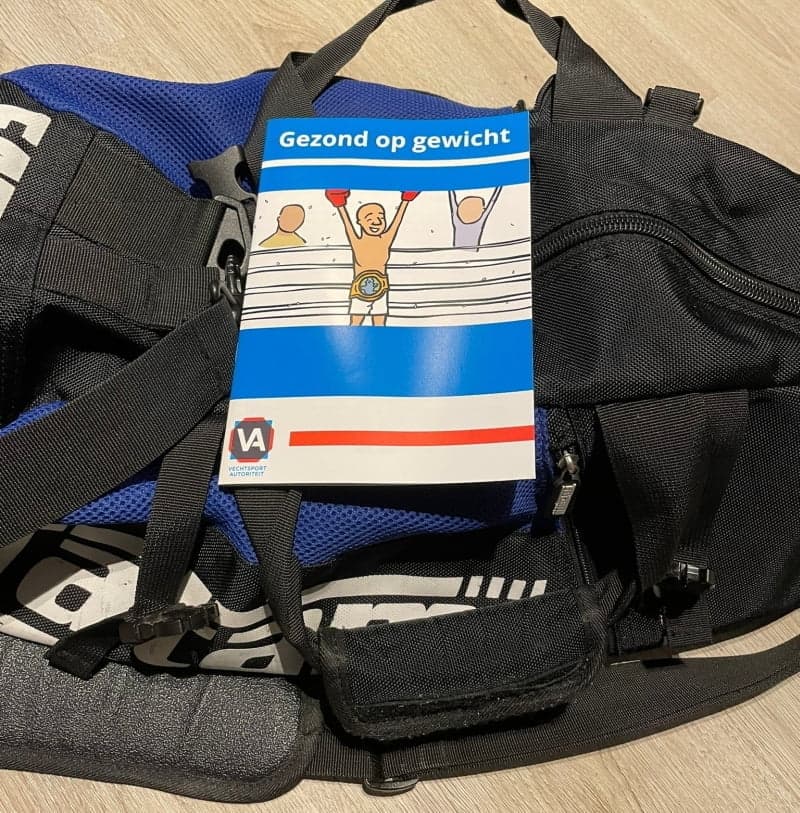
The VA has started an awareness campaign under the heading Healthy weight management. A brochure has been developed with information about the risks and guidelines on how to make weight healthily. Over the coming months this brochure will be distributed among competitive fighters and trainers at weigh-ins for events and galas. Talks are also under way with the people who train coaches, officials and others involved, to add the subject to their courses.
An information page has been launched on the VA website, and an animated clip has been made that is being shared via social media among other channels. “As athletes and trainers, sit down together and have a proper conversation about your approach,” is Pijnenburg’s message. “Talk about the tailored approach you need as an athlete. Go and talk to a sports dietitian. Every body works differently. Young differs from old, heavy differs from light, men differ from women, everyone needs an approach that suits them. By making sensible choices about that with your team, you reduce the health risks and increase the chance of sporting success. That is a double win.”