

News
Disciplinary committee off to a good start, but sees room for improvement
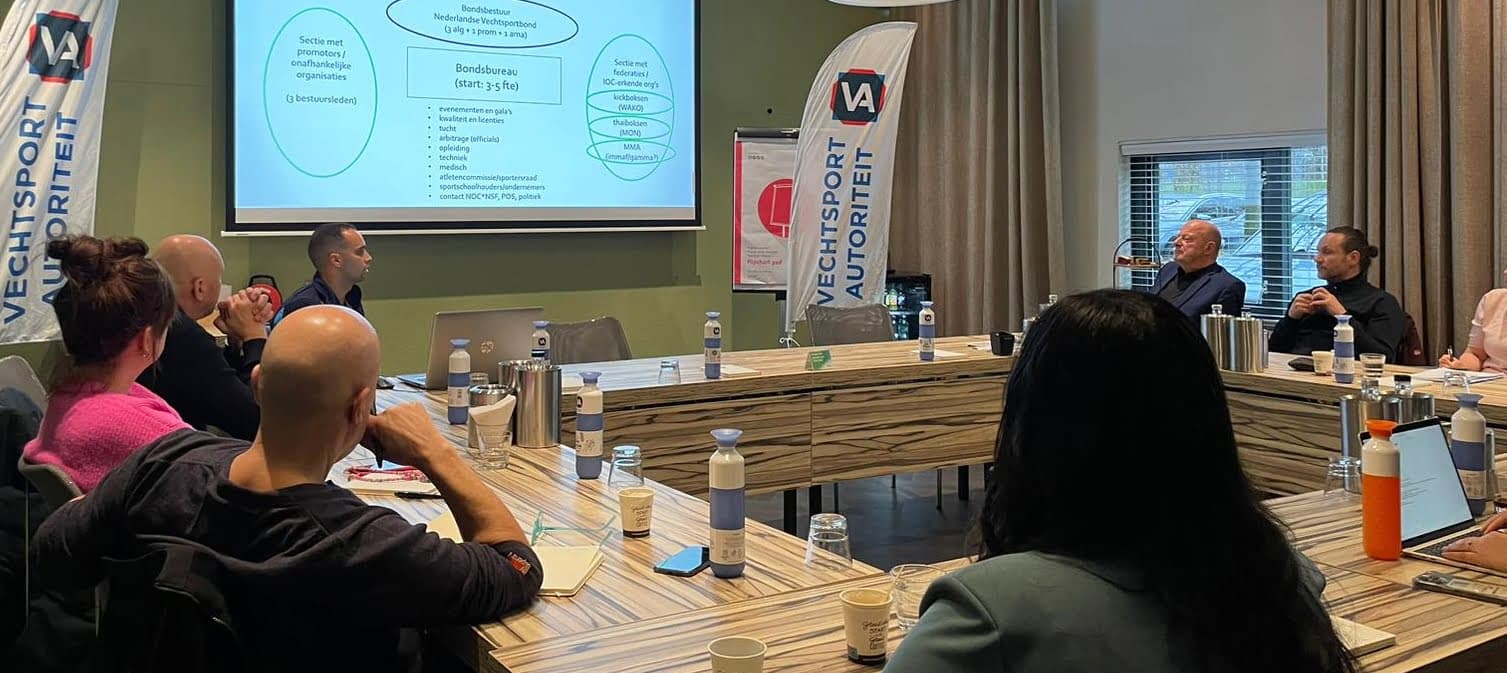
The disciplinary committee for combat sports, established in 2022, has proven its value. That was the main conclusion of the first extensive evaluation. But there is of course always room for improvement, the members also concluded.
The disciplinary committee consists of thirteen independent members: lawyers and people with a background in public order and/or the safety domain, with a passion for combat sports. The disciplinary regulations for kickboxing, muaythai and mixed martial arts (MMA) protect athletes, trainers, officials and others against undesirable behaviour.
If someone is disadvantaged because another person breaches the sporting rules or the code of conduct, a case can be submitted to the disciplinary committee using the reporting form. The committee will assess the matter in a transparent manner.
A measure can be imposed on people who have misbehaved. This may include: exclusion from participation in bouts, exclusion from attending events, or the loss of the Keurmerk Vechtsportautoriteit (the quality mark of the Dutch Combat Sports Authority) or the promoter's licence.
The lawyers who make up the committee met to review the disciplinary regulations, the procedures and their own performance. Setting up this new body has in any case not been in vain, given the work carried out in the first 18 months. Twelve cases were submitted. Some of these led to rulings that resulted in measures. These can be found here. A number of other cases are currently being dealt with.
Of the twelve cases submitted so far, five were examined in more detail during the evaluation in order to discuss their course and conclusions. How was evidence and witness testimony handled in these specific cases? How did the process of hearing both sides proceed? What aspects could lead to a more or a less severe sanction? In short: extensive attention was paid to the interests, rights and obligations of everyone involved in these cases.
Explicit attention was also paid to the procedural side. Can the process be organised more tightly? How does the disciplinary committee relate to an ongoing investigation by the Public Prosecution Service (Openbaar Ministerie) into the same case? With whom may information be shared, and with whom may it not? What may be published about the committee's ruling afterwards, and when are privacy interests at stake?
At the end of the session it was decided that evaluations will take place on a structural basis. Learning from experience and looking for opportunities for improvement will be the central focus.