

News
Meet… Dr Samefko Ludidi
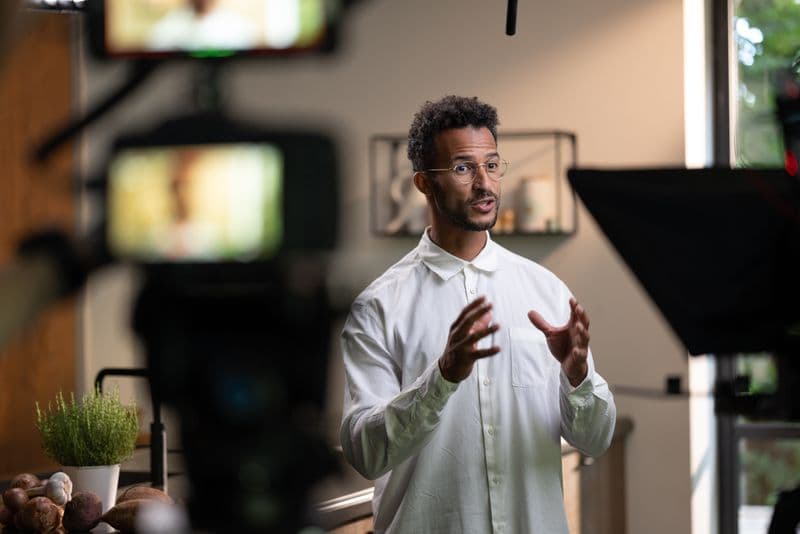
Nutrition expert Dr Samefko Ludidi works with top athletes such as Jarno Errens (UFC) and Ilias Ennahachi (One Championship). As a fan of the sport, he is happy to use his expertise to contribute to the professionalisation of Dutch combat sports. From now on he will also do so on the VA website and in our monthly newsletter.
Who is Samefko Ludidi?
‘I am a nutrition expert who focuses on practical choices that help people, including athletes, work towards a healthy body and a healthy mind. In doing so I do not only look at nutrition, but at more aspects of life, such as exercise and rest. I do this as a personal coach, but I also write books and publish vlogs, for example on Instagram. I like to share my knowledge and experience with as wide an audience as possible.’
What is your connection with combat sports?
‘I practised karate myself, at a reasonable level. So I have some idea of what combat sports demand from someone, both mentally and physically. I am also a fan; I enjoy following Glory, One and UFC, among others. When I was first asked to guide a top fighter, my field of work and my passion for the sport came together nicely. And the more I looked into the state of affairs in combat sports with regard to nutrition, training and rest, the more I saw that there is an enormous amount to be gained.’
How can combat sports move forward?
‘One of the most important points of attention is the preparation for bouts. Far too often weight cuts are still carried out on the basis of completely outdated or unsubstantiated methods. ‘This is how we have always done it’ is often the attitude. Top athletes sometimes work with very poorly structured schedules. That leads to situations in which people still have to lose 8 kilos shortly before a bout and get up to all kinds of nonsense. That comes at the expense of your health and your performance. But when it comes to recovery after a bout, too much is also done out of habit. On a Saturday, immediately after a bout, someone will say tough-mindedly that he will be back in the gym on Monday, because the combat sports culture more or less prescribes that. But he would benefit far more from rest if he wants to recover optimally. Top athletes also want to deal with their health in a sensible way, but where do you find knowledge about rest, for example? How should you sleep as a top athlete? There is a reason why babies need so much sleep; growth, recovery and development, processing impressions, all of that takes place during rest and sleep. If you only remain intensively active, you practically cannot improve.’
Are those the issues you want to address in this column?
‘I think it is good to get as many people in the sport as possible thinking about these kinds of matters. That is why I will not only address competitive fighters; recreational athletes also benefit from more knowledge about nutrition and exercise. Many people try to make conscious food choices, but a great deal of information is circulating, which is confusing. And then there are the sport-specific matters, such as how should I eat around training, what about fasting or fasted cardio training, recovery nutrition, combining the sport with Ramadan… I hope to get people thinking for themselves and to encourage them to improve their lifestyle. To show them that it is possible, in a simple and affordable way too. In doing so I try to offer tools so that they can translate knowledge into their daily lives.’
Coming soon on the VA website and in the September newsletter, Dr Ludidi will discuss the theme of intermittent fasting and sport, and explain which four elements he considers the basis for a successfully healthy lifestyle.
For more information, see: www.drludidi.com
Photo: Jeroen Jorissen